TKDCoaching’s TKD Patterns Hub provides instructors with clear teaching insights, coaching cues, and step-by-step guidance for every ITF pattern. This page offers an instructor-focused preview of Yon-Gae, highlighting key technical details, common errors to watch for, and practical coaching ideas you can apply immediately in class.
Yon-Gae Pattern
Yon-Gae is a 4th dan ITF Taekwon-Do pattern with 49 movements. It emphasises powerful movements, great side and backwards movements, and confident display of rhythm and timing. My favorite pattern as you can read here.
Yon-Gae demands strong control of shifting and turning, with multiple directional changes and varied stances. For senior black belts, it is an excellent test of whether the fundamentals of balance, breath control, and rhythm are truly embedded rather than simply “performed” for grading.
Pronunciation: How to pronounce Yon-Gye correctly
Pattern Speed: – 1 minute, 10 seconds
Approximate performance time for the full pattern. Timing varies between practitioners and is provided as an unofficial guide only.
Video Preview
OTHER PATTERNS ARE LOVELY… THIS IS SENSATIONAL! Master Mark Hutton’s passion for Taekwon-Do is contagious, and you can see in this clip the way he feels about the 4th dan pattern Yon-Gae tul. It is a great example of the intensity, precision, and attitude expected in advanced ITF patterns.
About Yon-Gae
Yon-Gae is named after a famous general of the Koguryo Dynasty, Yon Gae Somoon. The 49 movements refer to the last two figures of 649 A.D., the year he forced the Tang Dynasty to withdraw from Korea after destroying nearly 300,000 of their troops at Ansi Sung.
Key Technical Insights from GM Paul McPhail
Drawing from my ongoing study and technical work within ITF Taekwon-Do, each pattern in this Hub includes a short set of key technical points – practical reminders practitioners often overlook. These notes are personal insights and are not official ITF Technical Committee statements.
Key Technical Points
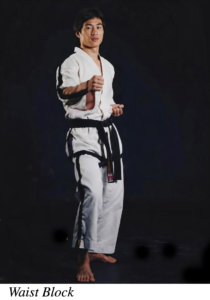
Movement 5: X-fist checking block: Arms are on a slightly flatter angle than the X-knifehand checking block.
- Movement 25: Straight forearm checking block: Fists at eye level, forearms on each chest.
- Movement 38: Waist block: Drop the body down on this movement (General Choi sometimes taught to raise the body).
- Movements 39 and 42 Step before knifehand techniques: Move your foot no more than 5 cm.
Training Suggestions
Build cardiovascular endurance by running the full pattern more than once per session. Yon-Gae is long, and fatigue is often what causes loss of height, balance, and sharpness late in the pattern.
Practise flying kicks as isolated drills before performing the full pattern. Focus on consistent height, correct knee lift, and controlled landings rather than simply getting through the jump.
Work on quiet, balanced landings. Aim to land softly and under control, with correct posture, rather than crashing down and needing to recover before the next movement.
Break the pattern into early, middle, and late sections. Many students perform the first half well but lose precision near the end, so train the final section when already tired.
Include plyometric preparation such as squat jumps, tuck jumps, and step jumps to develop explosive leg power and confidence in the air.
Finish training with one composed, controlled performance of Yon-Gae, prioritising stability, posture, and continuity over speed.
Teaching Ideas for Instructors
- Emphasise strong posture throughout the pattern, as any forward lean or collapse quickly affects balance and power.
- Isolate the kicking sequences for repetition work before reintegrating them into the full pattern to improve confidence and consistency.
- Focus on smooth, decisive directional changes, using floor markers or visual reference points to reinforce accurate angles.
- Use slow-motion run-throughs to highlight loss of balance, inconsistent stance length, or uneven weight distribution.
- Teach Yon-Gae as a conditioning pattern by running it back-to-back with minimal rest, helping students maintain technical quality under physical stress.
- Use video playback to allow students to self-assess posture, balance, and rhythm, promoting awareness and correction.
Background & Interesting Details
Yon Gae Somoon was not only a military general but effectively ruled Goguryeo as a military dictator during its final decades, holding more power than the king himself.
He came to power through a violent coup in 642 A.D., assassinating King Yeongnyu and installing a puppet king, a move that deeply divided Goguryeo’s ruling elite.
In Korean history, Yon Gae Somoon remains a controversial figure, remembered both as a national defender and as a ruthless strongman whose leadership style carried long-term consequences.
Frequently Asked Questions about Yon-Gae
- What grade is Yon-Gae for? 4th dan black belt.
- What are common mistakes?
Allowing sloppy technique to drift in due to fatigue. It is a long pattern with plenty of jumping and kicking, so takes a great deal of conditioning. - How should I introduce Yon-Gae to a new 4th dan?
Break the pattern into short segments built around the main shifts and kicking sequences. Learn the new movements that have not appeared in any other patterns first. Work on the kicsk separately.
Full Yon-Gae Breakdown
This full coaching session features Master Mark Hutton working with two black belts on Yon-Gae and Eui-Am, sharing essential corrections, timing cues, and performance details.
 Watch the full Yon-Gae and Eui-Am coaching session (Premium)
More TKD Patterns and Resources
ITF Encyclopaedia – available for Premium Members in our Resources.
Other Yon-Gae videos for Premium Members.
TKD Patterns Hub – patterns and instructor-focused insights
Related pages:
Insights on All 24 ITF Taekwon-Do Patterns by GM McPhail
Favourite Pattern Survey
Become a TKDCoaching Member
If you find these pattern insights helpful, you’ll love the full TKDCoaching library. Premium Members gain access to complete breakdowns, seminars, sparring sessions, warm-ups, self-defence modules, and more.