
Se-Jong Pattern – Preview & Insights
TKDCoaching’s TKD Patterns Hub provides instructors with clear teaching insights, coaching cues, and step-by-step guidance for every ITF pattern. This page offers an instructor-focused preview of Se-Jong, highlighting key technical details, common errors to watch for, and practical coaching ideas you can apply immediately in class.
Se-Jong Pattern
Se-Jong is a 5th degree black belt pattern containing 24 movements.
Se-Jong is a short yet powerful pattern. All 24 movements in the pattern are different – representing the 24 unique characters of the alphabet King Se-Jong invented. This history makes it fun to perform, and it is great for a short demonstration to students.
Pronunciation: How to pronounce Se-Jong correctly
Pattern Speed: – 39 seconds
Approximate performance time for the full pattern. Timing varies between practitioners and is provided as an unofficial guide only.
Video Preview
In the sample video above, you will see a short snippet from the full Se-Jong breakdown, illustrating the level of technical detail covered in the Premium session. This video features Mrs Suzanne Patterson, 6th degree black belt (now Master Patterson) and former New Zealand team member and coach.
About Se-Jong
Se-Jong is named after the greatest Korean king, Se-Jong, who invented the Korean alphabet in 1443 and was also a noted meteorologist. The diagram represents the king, while the 24 movements refer to the 24 letters of the Korean alphabet.
Key Technical Insights from GM Paul McPhail
Drawing from my ongoing study and technical work within ITF Taekwon-Do, each pattern in this Hub includes a short set of key technical points – practical reminders practitioners often overlook. These notes are personal insights and are not official ITF Technical Committee statements.
Key Technical Points
- Movement 3. Side piercing kick: After the side kick, make sure you step one shoulder width (from the pivoted foot position). You can watch this in the video preview above.
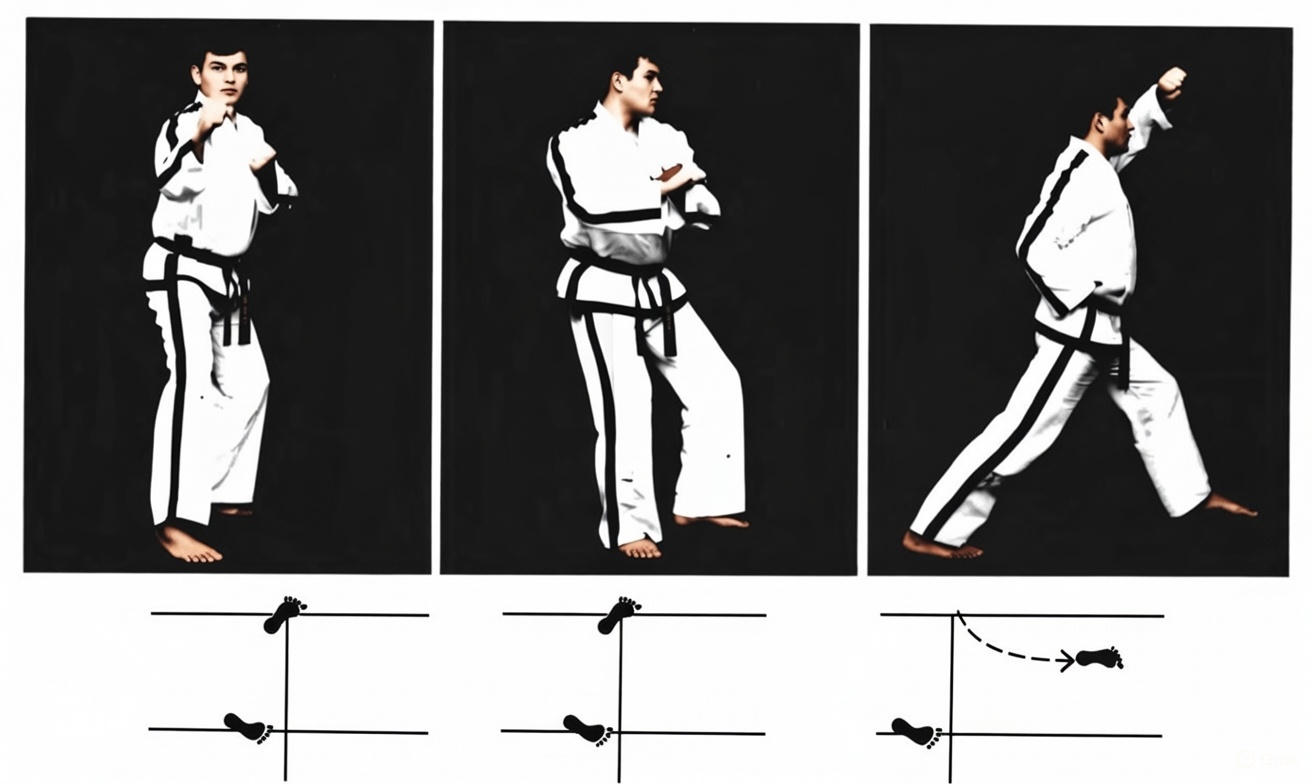
- Movement 13. Turning kick: Kick straight to C (not to an angle).
- Movement 15. Extend the arm horizontally: In slow motion (slightly slower than Yul-Gok, movement 1).
- Movement 19: Low side block: Higher arm position (waist level) than the low block in Moon-Moo, movement 9. Bend the low block more – about 45 degrees.
- Movement 20: One leg stance to walking stance: No sine wave from one-leg stance to walking stance.
- Movement 21: Backfist side front strike: Make sure the X-stance has the supporting leg straight.
Training Suggestions
- Although it only has 24 movements, it takes a bit of work to learn, since every movement is different. Break it into sections to learn initially.
- Treat Se-Jong as a quality-control pattern – every movement should look deliberate, balanced, and settled before the next begins.
Teaching Ideas for Instructors
Emphasise that every movement is unique. Encourage students to treat each technique as a distinct action with its own intent, rather than flowing through the pattern too quickly.
Coach sharp starts and clean finishes to every movement. Because the pattern is short, any lack of precision or incomplete technique is very noticeable.
Highlight Se-Jong as an excellent demonstration pattern. Encourage strong posture, confident eye focus, and crisp technique that can be easily understood by lower-grade students watching.
When teaching groups, use Se-Jong to practise mental sharpness and recall. The constant change of technique challenges focus and prevents students from relying on repetition or momentum.
Encourage instructors to briefly explain the historical link to the 24 characters of the Korean alphabet, as this gives students context and helps them appreciate why the pattern feels so varied.
Background & Interesting Details
- Se-Jong is named after King Sejong the Great (1397-1450), the fourth king of the Joseon (Lee) Dynasty and one of Korea’s most revered leaders.
- King Sejong is best known for creating Hangul, the Korean alphabet, to promote literacy among common people who could not read classical Chinese.
- The 24 movements of Se-Jong symbolise the 24 letters of Hangul, directly linking the pattern to education, learning, and national identity.
- Hangul was deliberately designed to be logical and scientific, making Se-Jong one of the earliest examples of state-led education reform in world history.
- Despite resistance from the ruling elite, King Sejong pushed ahead with Hangul because he believed knowledge should be accessible to everyone, not just scholars.
- Se-Jong tul reflects themes of clarity, balance, and precision, mirroring the structure and intent of Hangul itself.
- King Sejong also advanced science, astronomy, agriculture, and military defence, making his reign a period of exceptional cultural and intellectual growth.
Frequently Asked Questions about Se-Jong
- What grade is Se-Jong for?
Se-Jong is a 5th degree black belt pattern. - What are the most common mistakes in Se-Jong?
Inaccuracy of stances. It takes a while to learn which techniques are performed in L-stance versus fixed stance. - How should I introduce Se-Jong to new 5th degree students?
Enjoy the history as you teach, and insist on good power throughout.
Full Se-Jong Breakdown
The full, in-depth breakdown of Se-Jong is available for TKDCoaching Premium Members. In this session, I cover detailed coaching points, corrections, common mistakes, and teaching progressions you can use in your own classes.
 Watch the full Se-Jong breakdown video (Premium)
More TKD Patterns and Resources
TKD Patterns Hub – patterns and instructor-focused insights
Explore more pattern previews and coaching notes for all 24 ITF tuls.
Related pages:
Insights on All 24 Patterns by GM McPhail
Favourite Pattern Survey – we’d love to know what you think
Become a TKDCoaching Member
If you find these pattern insights helpful, you’ll love the full TKDCoaching library. Premium Members get access to complete breakdowns, instructor courses, warm-ups, sparring sessions, self-defence modules, and much more.