
Hwa-Rang Pattern – Preview & Insights
About Hwa-Rang
Hwa-Rang is a 2nd kup (red belt) pattern with 29 movements. It is named after the Hwa- Rang youth group which originated in the Silla Dynasty in the early 7th century. The 29 movements refer to the 29th Infantry Division, where Taekwon-Do developed into maturity.
Key Technical Insights from GM Paul McPhail
Drawing from my ongoing study and technical work within ITF Taekwon-Do, each pattern in this Hub includes a short set of key technical points – practical reminders practitioners often overlook. These notes are personal insights and are not official ITF Technical Committee statements.
Key Technical Points
- Movement 1. Palm pushing block: Knuckles at shoulder level. There is no twist of the palm – just push straight from from chest starting with the fingers up. Fingers are slightly forward to avoid tension in the wrist. Start with fingers up. Breathe slightly longer.
- Movement 5. Upward punch: Fist at chin level.
- Movement 7. Downward strike: Cross on the outside and finish at shoulder level, arm straight.
Training Suggestions
Spend time isolating the fast motion turning kicks, focusing on balance, height control, and clean re-chambering rather than speed alone.
Practise L-stance hip motion on the punches in the second half of the pattern. This is often done incorrectly.
Practise the application of the movements for better understanding and therefore performance.
Movements 11-12. Application: This is to defend against an opponent attempting to grab your wrist and pull you forward. Begin by stepping your back foot in while securing your own fist with your other hand. Then, pull both arms towards your body to break their grip as you simultaneously execute a side piercing kick.
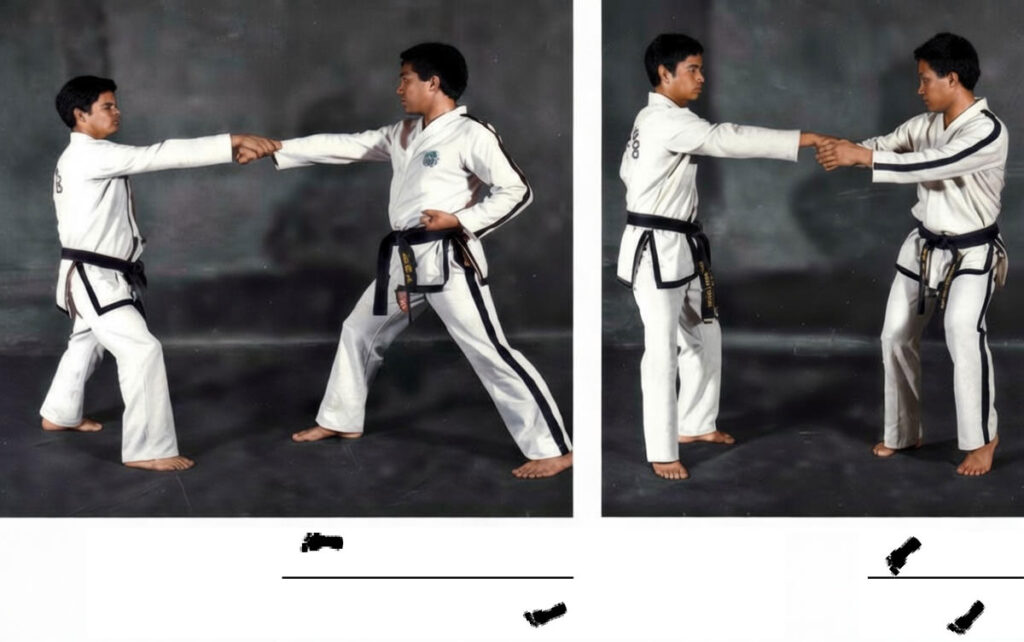
Teaching ideas for Instructors
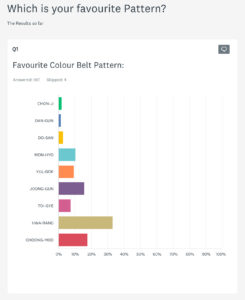 Hwa-rang is the MOST LOVED ITF colour belt pattern of them all so enjoy teaching it and tell your students it is the most popular pattern. They will then discover for themselves why that is.
Here is the proof. Favourite Pattern Survey
 - Teach the fast motion kicks as separate drills before reintegrating them into the full pattern.
- Emphasise quality of movement over speed. It is a strong pattern that everyone is capable of performing well.
- Use repetition in short sections to build confidence and consistency before running the complete pattern.
Background & Interesting Details
- This pattern is named after the Hwa-rang – the equivalent of the Japanese Samurai (but they predate the Samurai by some 500 years).
- The Hwa-Rang also had what you could consider its own Special Forces unit, akin to the famous Ninja of Japan. They were known as the “Sulsa” (Knights of the night) and specialised in intelligence gathering and assassinations. There were two sides to the Susa training; Jung-Do or “true way” where the Sulsa would fight openly with honour, and Am-Ja or “way of darkness” which taught them trickery and deceit to accomplish their task by whatever means were necessary.
- The most famous Hwa-Rang Warrior was General Kim Yoo-Sin (3rd dan pattern). Won-Hyo was also Hwa-Rang for a brief time.
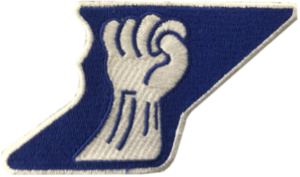
- The number of movements represent the 29th Infantry Division which was formed in September 1953 on Je-Ju Island, which General Choi made his base for training. It was also known as the Fist Division. He said he wanted to make the unit “the most righteous and desirable in the army”.
- During the day, they would practice combat training and at night they were schooled in literacy, which is very similar to the Hwa-Rang. So, General Choi modelled the 29th Infantry on the Hwa-Rang Warriors, as he must have seen his unit as similar in mode to the Hwa-Rang of old; as a military fighting force known for their courage and skills, but with morals and aims of wellbeing and unity of the country he loved.
- The Unit’s emblem was on a badge the shape of Korea with General Choi’s own fist smashing the 38th Parallel to reunite Korea into one country.
Frequently Asked Questions about Hwa-Rang
- What grade is Hwa-Rang for?
Hwa-Rang is performed at 2nd kup (red belt) in ITF Taekwon-Do. - What are the most common mistakes in Hwa-Rang?
Rushing the downward strike, incorrect weight distribution on the grab at movement 11, and angles of the turning kicks. - How should I introduce Hwa-Rang to new red belts?
Teach the pattern in sections with strong stance standards before linking the movements together.
More TKD Patterns and Resources
TKD Patterns Hub – patterns and instructor-focused insights
Explore more pattern previews and coaching notes for all 24 ITF tuls.
Related pages:
Insights on All 24 Patterns by GM McPhail
Favourite Pattern Survey – we’d love to know what you think
Full Hwa-Rang Breakdown
The full, in-depth breakdown of Hwa-Rang is available for TKDCoaching Premium Members. In this coaching session, Master Mark Trotter works through the pattern discussing each movement and making valuable corrections throughout. He concludes by demonstrating the complete pattern at full standard.
Watch the full Hwa-Rang coaching session (Premium)
Become a TKDCoaching Member
If you find these pattern insights helpful, you’ll love the full TKDCoaching library. Premium Members get access to complete breakdowns, instructor courses, warm-ups, sparring sessions, self-defence modules and much more.