
Choi-Yong Pattern – Preview & Insights
Choi-Yong Pattern
Choi-Yong is a 3rd dan ITF pattern with 46 movements. It is widely regarded as the most demanding pattern at this level due to its consecutive kicking sequences, directional control, and the need to maintain balance and posture under fatigue.
Pronunciation: How to pronounce Choi-Yong correctly
Pattern Speed: – 1 minute, 10 seconds
Approximate performance time for the full pattern. Timing varies between practitioners and is provided as an unofficial guide only.
Video Preview
In this preview clip, Mr Mark Trotter shares a key coaching cue for the high reverse hooking kick – bring the knee ahead of the target first, then follow through to roughly 45 degrees. He also warns against dropping the foot on the way through, which often turns the kick into an unwanted chopping action.
About Choi-Yong
The pattern is named after General Choi Yong, Premier and Commander-in-Chief of the Armed forces during the 14th century Koryo Dynasty. Choi Yong was greatly respected for his loyalty, patriotism, and humility. He was executed by his subordinate commanders headed by General Yi Sung Gae, who later become the first king of the Lee Dynasty.
Key Technical Insights from GM Paul McPhail
Drawing from my ongoing study and technical work within ITF Taekwon-Do, each pattern in this Hub includes a short set of key technical points – practical reminders practitioners often overlook. These notes are personal insights and are not official ITF Technical Committee statements.
Key Technical Points
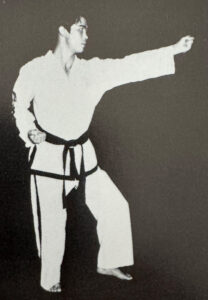 Movement 2: Vertical punch: Arm is straight. Relax after the punch – very slightly bend the arm.
- Movement 12: Step after turning kick: Step the foot slightly inside, similar to a rear foot stance position.
- Movement 14: Side piercing kick: The pulling arms application is for balance and can also be used to grab and pull an opponent.
- Movement 21-22: Pressing blocks: Fast motion – stop the hands sharply.
- Movement 29: Double step slide: Land heel-first on both steps – naturally. This is an exception to using the ball of the foot.
Training Suggestions
Spend extra time on single-leg balance work before training the pattern. Simple drills such as holding a chambered side kick or turning kick for 5–10 seconds will directly improve stability during the kicking sequences.
Practise slow-motion kicks through the full range of movement. Moving slowly exposes balance weaknesses and helps develop control in the supporting leg and hips.
 Train on a bosu ball or similar equipment to refine balance and control.
Include fatigue training by repeating the pattern or key kicking sections multiple times in a row. Choi-Yong exposes balance errors quickly when the legs are tired, so conditioning is essential.
Train supporting-leg strength with squats, lunges, and calf raises. A strong base makes a noticeable difference in maintaining balance throughout the pattern.
Finish sessions with one or two relaxed, well-balanced performances of the full pattern, focusing on precision and steadiness rather than speed.
- As you approach your first senior dan grading, make sure you are fully aware of the grading requirements in your country.
Teaching Ideas for Instructors
- Coach the Choi-Yong kicking combinations as a connected skill – chamber, pivot, body position, kick, re-chamber, kick then land.
- Insist on knee positioning first for the reverse hooking kick. If the knee does not travel correctly, the foot will not travel correctly.
- Watch the supporting foot. Late pivoting is a common cause of low height, knee strain, and loss of balance during the consecutive kicking sequences.
Background & Interesting Details
- Choi Yong is said to have developed martial arts skills at an early age.
- He joined the military as a young man and became famous at age 36 after repelling several rebellions.
- He fought in more than 80 battles, including on Jeju Island (where General Choi later developed Taekwon-Do).
- Choi Yong fought against a revolt but was eventually sentenced and executed by beheading. He was famously known to have said, “Grass will not grow on my grave due to the unjust end.” It is said that for over 600 years since his death, grass has not grown there.
Full Choi-Yong Video
The full, in-depth breakdown of Choi-Yong is available for TKDCoaching Premium Members. This coaching session includes detailed corrections, common mistakes, and teaching progressions you can apply in your own classes, with extra focus on the consecutive kicking sequences that make this pattern so challenging.
This premium coaching session is one of the more casual and practical formats: Mr Trotter takes Melissa Timperley through the pattern, then they focus specifically on kicking. Even if you do not practise Choi-Yong yet, the corrections and cues carry across to many other patterns and to kicking in general.